


Custom Office Furniture That Actually Fits Your Work
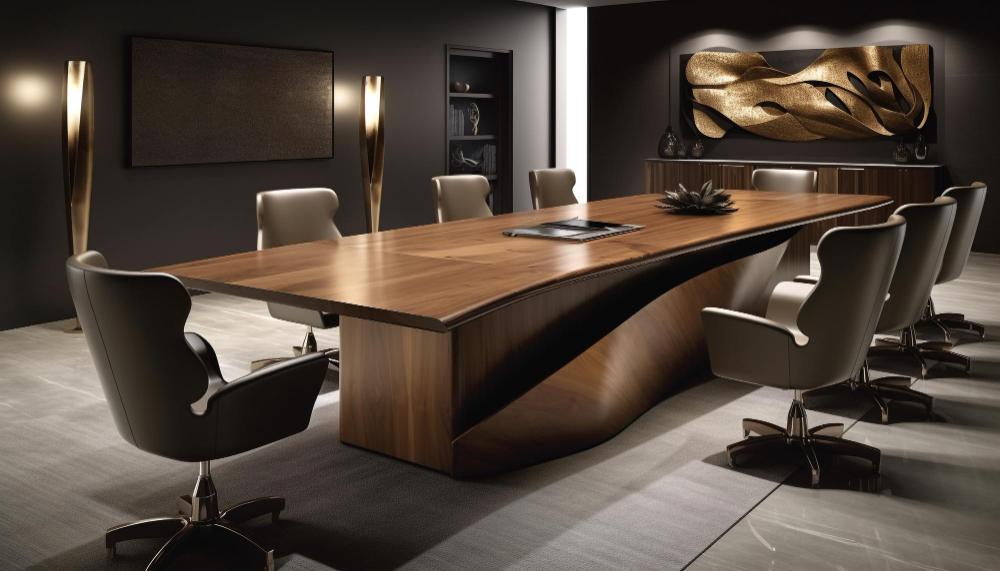
The Problem With "Good Enough" Office Furniture
Most people don't realize how much their furniture is quietly working against them — until they finally change it.
You've probably been there. The desk that's just a few inches too narrow. The shelving unit that doesn't quite reach the corner. The chair that came with the setup but was never really designed for someone who sits eight hours a day. You adapt, you make it work, and you tell yourself it's fine.
It's not fine. And deep down, you already know that.
The American workforce has changed dramatically over the past several years. Remote work, hybrid schedules, home studios, small business buildouts — people are spending more intentional time in their workspaces than ever before. And yet, most of them are still furnishing those spaces with whatever was available, affordable, and close enough to functional.
That's the gap that custom office furniture fills. Not just aesthetically — though it absolutely delivers there — but functionally, ergonomically, and strategically.
Why "Off the Shelf" Keeps Costing You More Than You Think
Here's a reality check that most furniture retailers don't want you sitting with: generic office furniture is designed for an average person in an average space doing average work. If any of those three things don't describe you — and for most people, none of them do — you're already compromising.
Think about what that compromise actually costs. Productivity lost to a poorly designed workspace. Physical discomfort that adds up to chronic back pain, wrist strain, or neck tension. The mental overhead of working in a space that feels cluttered, cramped, or just aesthetically off. These aren't small things. They compound over months and years.
Custom office furniture solves this by starting with your actual reality — your room dimensions, your workflow, your storage needs, your aesthetic preferences — and building outward from there. That's a fundamentally different approach, and the results feel fundamentally different too.
What Custom Actually Means (And What It Doesn't)
There's a misconception worth clearing up. A lot of people hear "custom" and immediately imagine a six-month wait and a five-figure bill. That's not what modern custom office furniture looks like for most buyers.
Yes, there are high-end custom furniture studios that operate on long timelines and luxury budgets. But there's also a robust middle market of skilled craftspeople, small workshops, and specialty retailers across the US who offer genuinely custom work at accessible price points. The key is knowing what you're buying and why.
What custom means: You specify the dimensions. You choose the materials. You decide on finishes, storage configurations, cable management features, and any built-in elements that matter to your workflow. The result is a piece — or a full suite of pieces — that was designed for your specific space and use case.
What custom doesn't mean: Necessarily expensive, necessarily slow, or necessarily complicated. A straightforward Custom office desk built to your exact dimensions and finish preferences might cost only moderately more than a quality off-the-shelf option, and it will serve you far better over time.
The Spaces Where Custom Makes the Biggest Difference
Not every workspace has the same needs, and part of what makes custom furniture so valuable is how differently it serves different environments.
Home offices are probably the most obvious beneficiary. Home offices come in all shapes and sizes — a converted bedroom, a finished basement, a dedicated room in a new build, a corner of a loft. Standard furniture wasn't designed for any of these specific situations. Custom furniture was designed for exactly yours.
Small business and studio spaces present a different kind of challenge. When you're outfitting a real workspace — a photography studio, a recording suite, a design firm, a therapy practice — the furniture needs to do more than look good. It needs to support specific equipment, manage cables and gear, accommodate multiple users, and hold up to daily professional use.
This is where custom studio office furniture genuinely earns its place. Studios have unique spatial demands — equipment mounting, acoustic considerations, ergonomic positioning for long creative sessions — that off-the-shelf furniture simply can't address. A built-to-spec studio setup can be the difference between a space that works for you and one you're constantly working around.
What to Look For When Sourcing Custom Office Furniture in the US
The US market for custom office furniture has grown significantly, which is great — but it also means there's more variance in quality and process than ever before. Here's how to find the right partner for your project.
Start with materials. Solid hardwoods, quality plywood, and durable laminates all have their place depending on your budget and aesthetic preferences. What you want to avoid is MDF-heavy construction in pieces that will bear a lot of weight or see heavy daily use. Ask specifically about joinery methods and hardware quality — these are where cheaper builds cut corners.
Understand the design process. A good custom furniture maker will want to understand your workflow, not just your dimensions. They should ask about how you use the space, what equipment lives on or in the furniture, and what your long-term plans are for the room. If a vendor just takes measurements and disappears into production, that's a yellow flag.
Look for local. There are excellent custom furniture craftspeople and small workshops in nearly every major US metro area. Buying local means shorter lead times, easier communication, the ability to see materials and finishes in person, and supporting American makers. It's worth the search.
Get references. Custom office furniture is a relationship, not a transaction. Ask to see previous work, talk to past clients if possible, and get a clear understanding of timelines and revision processes before you commit.
The Long-Term Math on Custom Furniture
Here's an angle that often gets overlooked: custom office furniture is almost always the better financial decision over a five-to-ten-year horizon.
Generic office furniture, especially in the mid-price range, is designed with planned obsolescence in mind. The drawer slides wear out. The finish chips. The structural integrity fades after a few years of real use. You end up replacing it, which means you've paid twice.
Custom furniture, built from quality materials with solid construction, tends to last significantly longer — and it can often be repaired, refinished, or reconfigured rather than replaced. That's a fundamentally different relationship with your workspace.
There's also the resale or relocation factor. Custom furniture built to a specific space can often be dismantled and reassembled, and quality pieces hold value better than flat-pack alternatives.
Building a Workspace That Works as Hard as You Do
The best custom office furniture doesn't just fill a room. It shapes how you work in that room. It removes friction. It gives everything a place. It makes the space feel intentional rather than improvised.
If you've been tolerating a workspace that's almost right, it might be time to stop tolerating it. Your environment affects your output more than most productivity advice ever acknowledges. The people who work in spaces built specifically for them — their dimensions, their tools, their habits — work differently. Better. With less daily friction wearing them down.
That's not a small thing. That's the whole point.
Ready to Build Your Ideal Workspace?
If you're serious about creating an office space that genuinely supports the way you work, start by getting specific about what you actually need. Measure your space, list your equipment, think about your daily workflow. Then talk to a custom furniture maker who builds for real people doing real work.
You deserve a workspace that was made for you — not one you had to settle for.
Reach out to a local custom furniture studio today, and start the conversation. Your best work starts with the right space.

 English
 Arabic
 French
 Spanish
 Portuguese
 Turkish
 Dutch
Dutch
 Italiano
 Russian
 Romaian
 Portuguese (Brazil)
 Greek
Greek
