Introduction
Primary care providers play a vital role in the healthcare system by offering preventive care, routine checkups, chronic disease management, and early diagnosis of medical conditions. While physicians focus on delivering quality patient care, accurate documentation, coding, and billing processes are essential to ensure healthcare practices receive proper reimbursement for their services.
Primary care coding and billing involves translating medical services, procedures, and patient diagnoses into standardized codes used for insurance claims and payment processing. Even a small mistake in coding or documentation can lead to claim denials, delayed payments, and revenue loss for healthcare providers.
With changing healthcare regulations, evolving payer requirements, and increasing administrative responsibilities, managing billing processes has become more complex for primary care practices. Understanding proper coding practices, common challenges, and effective solutions can help providers improve financial performance while maintaining compliance.
This guide explains the importance of primary care coding and billing, common obstacles practices face, and strategies to create a more efficient revenue cycle.
Understanding the Importance of Primary Care Coding and Billing
Accurate coding and billing are the foundation of a successful primary care practice. Every patient visit involves several steps, including documentation of medical services, assigning appropriate diagnosis and procedure codes, submitting claims, and receiving reimbursement from insurance companies.
Medical coding converts physician documentation into standardized codes, such as ICD-10 diagnosis codes and CPT procedure codes. These codes communicate important information to insurance companies about the reason for the visit and the services provided.
Proper primary care coding and billing helps healthcare providers in several ways:
Improved Claim Accuracy
Accurate coding reduces errors during claim submission. When diagnosis codes and procedure codes correctly match the patient’s condition and services provided, insurance companies are more likely to approve claims without delays.
Incorrect coding can result in rejected claims, requiring additional time for corrections and resubmission. A strong coding process helps practices maintain a steady cash flow.
Better Revenue Management
Primary care practices depend on timely reimbursements to manage operational expenses, including staff salaries, technology investments, and patient care resources.
Effective billing processes ensure providers receive appropriate payment for services performed. Proper documentation and coding also help identify missed revenue opportunities, such as unbilled procedures or incorrect reimbursement levels.
Maintaining Compliance
Healthcare billing must follow strict regulations established by government programs and insurance companies. Incorrect coding practices can create compliance risks, including audits, penalties, and financial consequences.
A well-managed coding and billing system ensures that claims are submitted according to current healthcare guidelines and payer requirements.
Common Challenges in Primary Care Coding and Billing
Although coding and billing are essential, many primary care practices struggle with managing these responsibilities effectively. Healthcare providers often face administrative challenges that impact productivity and revenue.
Frequent Coding Changes and Updates
Medical coding guidelines continue to evolve as healthcare policies change. New CPT codes, ICD-10 updates, and payer-specific requirements require billing teams to stay informed.
Failure to follow updated coding rules can result in inaccurate claims and reimbursement issues. Regular training and continuous education are necessary to maintain coding accuracy.
Complex Documentation Requirements
Documentation plays a major role in successful billing. Insurance companies require detailed records that support the services billed.
Incomplete patient notes, missing medical information, or unclear documentation can create problems during claim reviews. Physicians must ensure that their documentation accurately reflects the complexity of patient care.
For example, evaluation and management (E/M) coding depends on factors such as medical decision-making, patient history, and the level of service provided. Proper documentation helps justify the selected code.
Claim Denials and Payment Delays
Claim denials are one of the biggest challenges faced by primary care providers. Common reasons include:
- Incorrect patient information
- Missing documentation
- Invalid diagnosis codes
- Incorrect procedure codes
- Insurance eligibility issues
- Lack of prior authorization
Managing denials requires identifying the root cause, correcting errors, and creating strategies to prevent future issues.
Limited Internal Resources
Many small and independent primary care practices have limited staff members handling multiple administrative tasks. Managing coding, billing, insurance verification, and claim follow-up can become overwhelming.
When billing responsibilities are not managed efficiently, providers may experience delayed payments and increased administrative workload.
Best Practices for Improving Primary Care Coding and Billing Efficiency
Primary care practices can improve their financial performance by implementing effective coding and billing strategies. A structured approach helps reduce errors, improve reimbursement, and simplify administrative operations.
Maintain Accurate Medical Documentation
High-quality documentation is the first step toward successful billing. Physicians should clearly record patient conditions, treatment plans, procedures performed, and medical decision-making details.
Billing teams rely on provider documentation to assign appropriate codes. Complete and accurate records help support claims and reduce the risk of payer disputes.
Use Updated Coding Resources
Healthcare coding guidelines change regularly. Practices should use updated coding resources and ensure billing teams understand the latest requirements.
Regular training sessions help coding professionals stay familiar with:
- New CPT code changes
- ICD-10 updates
- Modifier usage
- Insurance policy changes
- Compliance requirements
Keeping coding knowledge current improves claim accuracy and reduces unnecessary denials.
Conduct Regular Claim Audits
Regular billing audits help identify problems before they affect revenue. Audits review submitted claims, documentation quality, coding accuracy, and reimbursement patterns.
By analyzing billing data, practices can discover areas for improvement and implement corrective actions.
Improve Insurance Verification Processes
Insurance verification is an important step in preventing claim issues. Before providing services, practices should confirm patient eligibility, coverage details, and payer requirements.
Accurate insurance information helps reduce denied claims caused by coverage problems and improves the overall patient experience.
Leverage Professional Billing Support
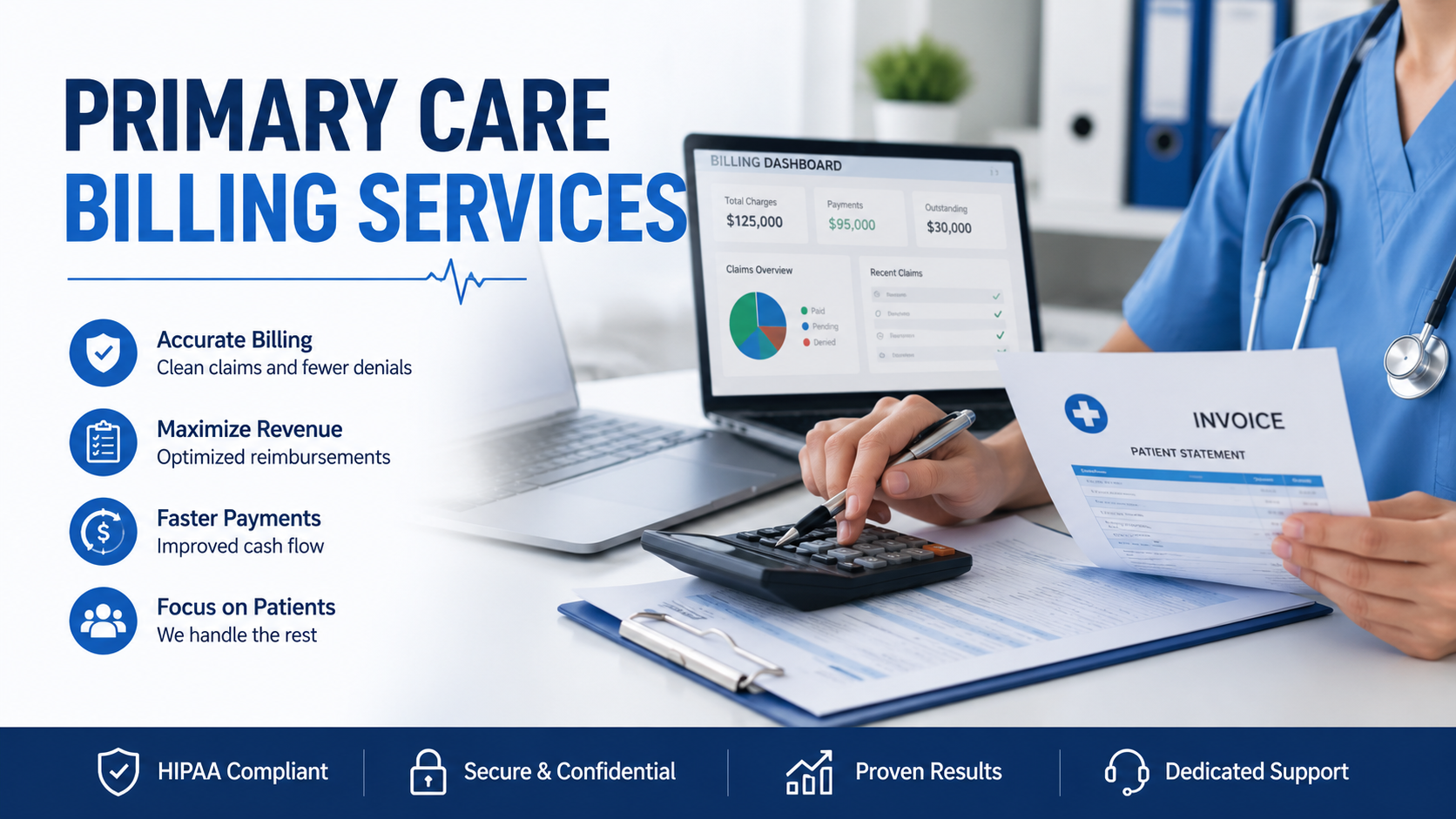
Many primary care practices choose to work with experienced billing specialists to manage complex administrative tasks. Professional support can help improve claim submission accuracy, reduce denials, and increase revenue consistency.
Outsourcing billing responsibilities allows physicians and their staff to spend more time focusing on patient care rather than managing complicated billing processes.
How Technology Supports Better Primary Care Coding and Billing
Technology has transformed the healthcare billing process by improving accuracy, efficiency, and communication between providers and billing teams.
Electronic health records (EHR) systems help maintain organized patient documentation, while practice management software supports scheduling, claims tracking, and payment monitoring.
Modern billing technology can assist with:
- Automated claim checks
- Faster claim submission
- Error identification
- Payment tracking
- Reporting and analytics
Advanced tools also help practices analyze financial performance and identify trends affecting revenue.
However, technology alone cannot replace proper coding knowledge and experienced billing professionals. Successful billing requires a combination of accurate documentation, skilled coding, and effective management processes.
Frequently Asked Questions (FAQs)
What is primary care coding and billing?
Primary care coding and billing is the process of converting healthcare services and patient diagnoses into standardized codes for insurance claims. It ensures providers receive accurate reimbursement for medical services.
Why is accurate coding important for primary care providers?
Accurate coding helps prevent claim denials, improves reimbursement, supports compliance, and ensures healthcare providers are paid correctly for the services they provide.
What are common reasons for primary care billing claim denials?
Common reasons include incorrect coding, incomplete documentation, insurance eligibility issues, missing information, and failure to follow payer-specific requirements.
How can primary care practices reduce billing errors?
Practices can reduce errors by maintaining accurate documentation, conducting regular audits, training staff, verifying insurance information, and following updated coding guidelines.
Should primary care providers outsource billing services?
Many primary care providers outsource billing to improve efficiency, reduce administrative workload, and access experienced billing professionals who understand complex payer requirements.
How does proper documentation affect primary care billing?
Proper documentation supports the services billed, helps select accurate codes, reduces audit risks, and improves the chances of receiving timely reimbursement.
Conclusion
Effective primary care coding and billing is essential for maintaining a financially healthy medical practice. Accurate documentation, updated coding knowledge, efficient claim management, and strong compliance practices help providers reduce revenue losses and improve overall performance.
As healthcare billing requirements continue to become more complex, primary care practices need reliable processes to manage claims and reimbursements effectively. Partnering with experienced professionals can help simplify administrative challenges and create a smoother revenue cycle.
By investing in efficient Medical Billing Services, primary care providers can focus more on delivering quality patient care while ensuring their practice receives accurate and timely payments.





 English
 Arabic
 French
 Spanish
 Portuguese
 Deutsch
 Turkish
 Dutch
Dutch
 Italiano
 Russian
 Romaian
 Portuguese (Brazil)