


Spot Resistance Welder: Principles, Applications & Best Practices for Modern Production
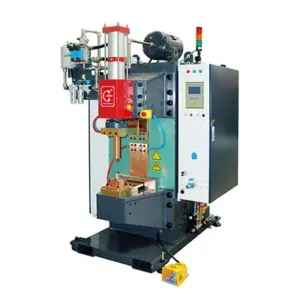
In high-volume manufacturing environments where speed, consistency, and metal integrity matter, a spot resistance welder stands as a cornerstone of modern joining technology. Whether you’re integrating welding equipment into an automated line or replacing legacy systems to meet stricter quality requirements, understanding the core principles and practical considerations of spot welding is essential.
As a global manufacturer of industrial welding and metal-joining equipment, Heron Welder delivers robust, high-precision spot resistance welding solutions backed by engineering expertise and decades of application knowledge. This article explores what a spot resistance welder is, how it works, where it’s applied, and how to optimize performance for maximum throughput and part quality.
What Is a Spot Resistance Welder?
A spot resistance welder is a type of resistance welding machine that joins overlapping metal sheets by applying electrical current and mechanical pressure through copper alloy electrodes at discrete points (spots). The resulting fusion bond forms where resistance heating causes the base metals to melt and fuse.
Key components include:
-
Power Supply: Typically medium-frequency DC (MFDC) or capacitor discharge units that deliver controlled welding current.
-
Electrodes: Copper or copper alloy contacts that conduct current and apply pressure.
-
Force Control: Pneumatic, hydraulic, or servo-driven actuators that regulate electrode force.
-
Control System: A programmable controller that manages current, time, force, and sequencing.
This combination allows the spot welder to create consistent weld nuggets with precise control over heat and deformation critical in automotive, appliance, and electronics manufacturing.
How Spot Welding Works: Technical Principles
At its core, resistance spot welding operates on three interconnected principles:
1. Ohm’s Law and Resistance Heating
When electrical current passes through a conductor, heat is generated in proportion to resistance (I²R). At the interface of two metal sheets, electrical resistance spikes, concentrating heat exactly where the weld is required. This localized heating melts the metals only at the contact point, minimizing heat-affected zones.
2. Applied Pressure for Metallurgical Bonding
Simultaneously, pressure from the electrodes holds the sheets together. This ensures intimate contact and helps forge a strong metallurgical bond as the molten metals cool under force.
3. Timing and Control
Precise control of weld current, weld time, hold time, and electrode force is critical for consistent weld quality. Too much current or time leads to expulsion and electrode wear; too little results in weak joints.
Modern spot resistance welders from Heron utilize advanced programmable controls and feedback systems to maintain optimal parameters across thousands of cycles, which is crucial for automation and repeatability.
Typical Applications of Spot Resistance Welders
Spot resistance welding is widely used wherever sheet metal assemblies must be joined quickly and accurately.
Automotive Manufacturing
One of the largest consumers of spot resistance welding, automotive OEMs rely on spot welders for:
-
Body-in-white assembly (doors, roof panels, floors)
-
Bracket and component attachments
-
Battery pack tab welding in electric vehicles
Heron’s MFDC and servo-driven spot resistance welders are engineered for high cycle rates and integration with robotic systems, meeting the throughput and reliability demands of automotive production lines.
Appliance and Consumer Goods
Appliance manufacturers use spot welders for assembling:
-
Refrigerators and washing machines (frames, panels)
-
Heating elements and wire attachments
-
Chassis and bracket joints
The ability to perform consistent welds on thin gauge materials makes spot resistance welding ideal for these applications.
Electronics and Electrical Components
From transformer cores to battery modules and contact assemblies, precision spot welding delivers repeatable joints without excessive heat that could damage sensitive components.
Aerospace, Construction, and Heavy Equipment
In industrial segments where high-strength joints are required, spot resistance welders equipped with higher capacity power supplies and robust force systems address thicker materials and tougher duty cycles.
Types of Spot Resistance Welders
Selecting the right spot welder depends on part geometry, cycle time targets, and integration needs.
MFDC Spot Resistance Welders
Medium-frequency DC (MFDC) spot welders deliver stable current profiles and efficient energy transfer. Advantages include:
-
Precise control of heat delivery
-
Lower electrode wear
-
Easier integration with automation
These qualities make MFDC welders a preferred choice for automotive and high-volume applications.
Capacitor Discharge Spot Welders
Capacitor discharge models excel at very short, high-peak current cycles ideal for thin materials or delicate assemblies where traditional welders could overheat the part.
Servo and Pneumatic Systems
Servo-driven electrodes offer programmable force profiles and rapid positioning, beneficial for robot-mounted systems and operations requiring dynamic force control. Pneumatic systems provide cost-effective force for standard applications.
Heron offers configurable platforms to match the exact requirements of your manufacturing environment.
Spot Welding vs. Other Joining Methods
Spot Welding vs. MIG/TIG
Unlike gas shielded arc welding (MIG/TIG), which is slower and produces significant heat-affected zones, spot resistance welding is:
-
Faster for sheet metal joints
-
Cleaner and requires no filler metal
-
Easier to automate
However, arc welding remains superior for thicker sections and complex geometries.
Spot Welding vs. Adhesive Bonding
While adhesive bonding can distribute loads across larger areas, it requires curing time and surface preparation. Spot resistance welding delivers instantaneous joints without consumables.
Best Practices for Spot Resistance Welding
To ensure optimal performance and long weld electrode life:
Maintain Electrode Tips
Regular dressing and replacement of electrode tips ensure consistent current transfer and minimize heat build-up.
Monitor Weld Parameters
Use data logging and closed-loop feedback to detect parameter drift and maintain joint quality within specification.
Integrate with Automation
Robotics and vision systems enhance repeatability and reduce human variability. Heron’s welding controllers support industry-standard communication protocols for seamless integration.
Train Operators and Engineers
Understanding weld schedules and recognizing signs of improper welds (e.g., insufficient nugget size, expulsion) empowers teams to troubleshoot quickly.
FAQs About Spot Resistance Welders
1. What materials can be welded with a spot resistance welder?
Most conductive metals like mild steel, stainless steel, and some aluminum alloys can be spot welded. Material thickness and electrical resistivity dictate the required power and weld schedule.
2. How do I know if my spot weld joints are sufficient?
Weld quality can be assessed through nugget diameter measurement, destructive testing, or non-destructive inspection methods like ultrasonic or X-ray, depending on part requirements.
3. Can spot welders be used in automated production lines?
Absolutely. Spot resistance welders are widely integrated with robots, conveyors, and PLC controls to create highly efficient automated production systems.
4. What are common challenges in spot welding?
Issues like electrode wear, inconsistent current, and incorrect force profiles can lead to weak or irregular welds. Proper maintenance and parameter control address these challenges.
5. How long do electrode tips last?
Tip life depends on material, current levels, duty cycle, and maintenance. Regular dressing and replacement are key to predictable weld quality.
Partner with Heron for Spot Resistance Welding Excellence
A reliable, high-performance spot resistance welder is foundational to efficient sheet metal manufacturing. At Heron Welder, we combine world-class engineering with deep application know-how to deliver tailored welding systems from MFDC and capacitor discharge units to fully automated robotic cells.
Request a quote or consult with our experts to design a spot resistance welding solution that fits your part designs, production rates, and automation strategy. Let Heron be your partner in advancing welding performance, productivity, and quality.

 English
 Arabic
 French
 Spanish
 Portuguese
 Deutsch
 Turkish
 Dutch
Dutch
 Russian
 Romaian
 Portuguese (Brazil)
 Greek
Greek
