


When Should Moldpartsfactory Mold Safety Lock Components Be Inspected
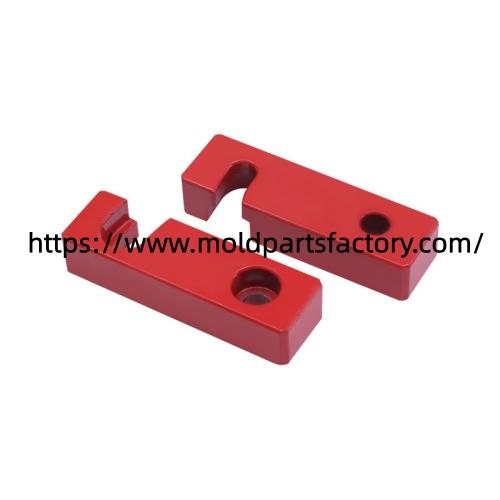
Mold Safety Lock plays an important role in mold maintenance because servicing work can expose personnel to moving assemblies, stored mechanical energy, and potential pinch points. Injection molding equipment contains multiple moving sections, and maintenance may require access to areas that are protected during normal operation. OSHA guidance states that lockout and tagout procedures should be followed when servicing requires access to hazardous areas or removal of guards and safety devices. A dedicated mechanical component can form part of a broader safety approach, but it should never replace the required machine safety procedures.
Maintenance conditions are different from normal production. During production, guards, gates, and interlocks help prevent access to moving portions of the machine. When technicians need to inspect, clean, adjust, or replace tooling components, those protections may be opened or removed according to established procedures. OSHA specifically notes that workers should not rely on interlocks instead of lockout and tagout when maintenance exposes them to hazardous energy. This distinction is important when planning maintenance operations.
A mechanical support device can provide an additional physical barrier against unintended movement when used according to the equipment design and applicable procedures. Its role should be clearly defined by the tooling or machine manufacturer. The component needs to fit the intended location and withstand the forces associated with its application. Buyers should therefore consider dimensions, mounting method, working position, material, surface condition, and compatibility with the tooling structure before placing an order.
Correct installation is another important consideration. A safety component cannot perform its intended function if it is loosely mounted, incorrectly positioned, damaged, or used outside its design purpose. Before maintenance begins, technicians should check mounting points and surrounding structures for cracks, deformation, corrosion, loose fasteners, or unusual wear. A simple visual inspection can help identify conditions that need attention before personnel enter the working area.
The condition of the surrounding tooling also matters. A damaged mounting surface can affect how a component sits against the intended contact area. Accumulated grease, plastic residue, metal particles, or other debris can interfere with proper positioning. Keeping contact areas clean makes inspection easier and helps maintenance personnel identify changes in condition. Inspection records can also be useful when the same mold is serviced regularly.
Mold changes deserve particular attention because they can involve heavy tooling and multiple connections. Workers may need to disconnect water lines, electrical connections, hydraulic lines, and other services before removing or installing a mold. OSHA has documented incidents involving workers being caught between mold halves during mold change activities when the machine was not properly shut down and locked out. This highlights why a defined maintenance procedure should address hazardous energy before physical work begins.
A suitable mechanical safety component can be considered alongside these procedures as part of the tooling design. Its dimensions should correspond with the available installation space, while its material and construction should suit the working environment. Temperature, humidity, exposure to lubricants, repeated handling, and contact with other metal parts may influence the selection. For manufacturers purchasing components in different sizes or configurations, providing accurate application details can help reduce fitting problems.
Inspection frequency should reflect actual use. A mold that undergoes frequent changes may require more regular checks than tooling used occasionally. Maintenance personnel can look for visible deformation, surface damage, corrosion, loose mounting hardware, and changes in positioning. If a component shows unusual wear, the surrounding tooling should also be inspected rather than replacing the part without checking the cause.
Clear maintenance procedures are equally important. Personnel should know which machine controls must be shut down, which energy sources must be isolated, how stored energy is controlled, and which protective devices are required before work begins. OSHA recommends an effective lockout and tagout program for maintenance activities involving hazardous energy. A physical component should support these procedures rather than being treated as a substitute for them.
For mold manufacturers and tooling buyers, product selection should also consider consistency between drawings, dimensions, installation requirements, and actual production conditions. Moldpartsfactory provides mold components for manufacturers that need practical options for tooling construction and maintenance. Buyers can discuss application details, dimensions, material requirements, and installation conditions when evaluating suitable components.
Good maintenance planning is not only about responding to visible damage. It also means considering how a mold is opened, supported, serviced, moved, and returned to production. A properly selected mechanical safety component can contribute to a structured maintenance system when combined with appropriate machine safeguards, training, inspection, and hazardous energy control. Manufacturers interested in reviewing available mold components can visit https://www.moldpartsfactory.com/product/ and compare suitable options according to their tooling requirements.

 English
 Arabic
 French
 Spanish
 Portuguese
 Deutsch
 Turkish
 Dutch
Dutch
 Russian
 Romaian
 Portuguese (Brazil)
 Greek
Greek
