


Which Stress Ball Works Better?
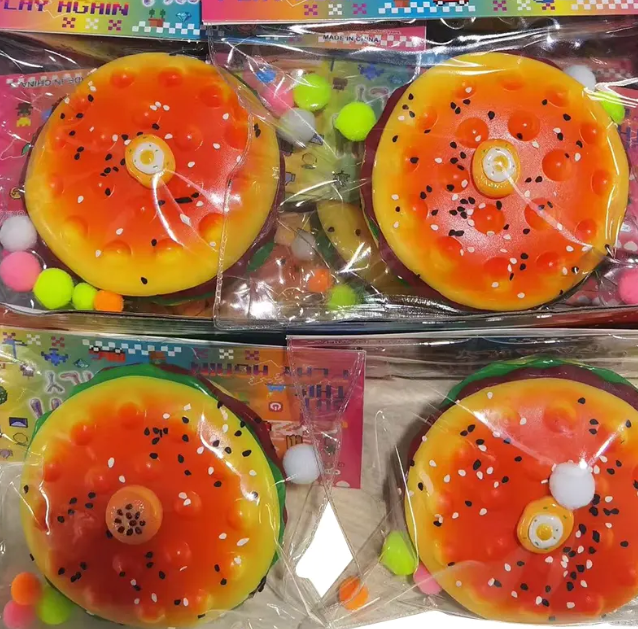
A Maltose Stress Ball stands out among stress relief tools due to its internal gel viscosity and slow deformation behavior. Compared with foam-based, bead-filled, or silicone-only stress balls, its tactile response is more layered and gradual.
Stress balls can generally be divided into three main categories: foam compression types, bead-filled resistance types, and gel-based viscous types. The Maltose Stress Ball belongs to the gel-based category, but its maltose syrup structure gives it a distinct density profile.
Foam-Based Stress Balls
Foam stress balls rely on polyurethane cellular structure. When squeezed, air pockets collapse and then slowly recover. This creates a lightweight and fast rebound feel.
Low density internal structure
Quick shape recovery
Light resistance level
Less internal weight sensation
While foam versions are widely used, they do not provide deep pressure feedback due to their porous structure.
Bead-Filled Stress Balls
Bead-filled designs use microplastic or silicone beads inside a flexible shell. When squeezed, beads shift and redistribute.
Granular internal movement
Uneven pressure feedback
Moderate durability
Slightly noisy tactile response
This type creates a textured feel but lacks fluid consistency during compression.
Maltose Stress Ball Behavior
The Maltose Stress Ball uses a viscous gel system that behaves differently from both foam and bead types. The internal maltose gel has high molecular resistance, meaning it flows slowly under force.
Key characteristics include:
Slow deformation under pressure
Delayed rebound recovery
Dense, heavy squeeze sensation
Smooth internal flow without granularity
The viscosity level typically exceeds 10,000 mPa·s, which is significantly higher than standard cosmetic gels. This is what creates its “heavy resistance” feeling.
Sensory Response Mechanism
When the hand compresses a Maltose Stress Ball, the pressure is distributed evenly across the gel mass. Because the gel does not shift instantly, force builds gradually.
This creates a unique feedback loop:
Initial resistance buildup
Slow internal displacement
Gradual shape deformation
Delayed return to form
This cycle is repeated with each squeeze, making the sensory experience consistent.
Thermal Sensitivity Difference
Unlike foam or bead stress balls, maltose gel is slightly temperature-sensitive. In warmer environments, viscosity decreases slightly, making the ball feel softer. In cooler environments, resistance increases, creating a firmer squeeze sensation.
This adds a dynamic layer to tactile experience that other stress ball types do not provide.
Usage Preference Differences
User preference often depends on intended function:
Foam types: light casual squeezing
Bead types: textured sensory stimulation
Maltose Stress Ball: deep pressure and sustained focus use
The maltose gel structure is especially suited for repetitive, slow squeezing patterns rather than fast fidgeting.
Overall Functional Position
Among stress relief tools, the Maltose Stress Ball occupies a middle-to-heavy resistance category with emphasis on controlled movement and consistent feedback.
Its defining advantage is not speed or elasticity, but stability of tactile response across repeated use cycles.

 English
 Arabic
 Spanish
 Portuguese
 Deutsch
 Turkish
 Dutch
Dutch
 Italiano
 Russian
 Romaian
 Portuguese (Brazil)
 Greek
Greek
